مكان عبادة · Fatih, إسطنبول
Hirami Ahmed Pasha Mosque
Hirami Ahmet Paşa Cami
صورة فوتوغرافية
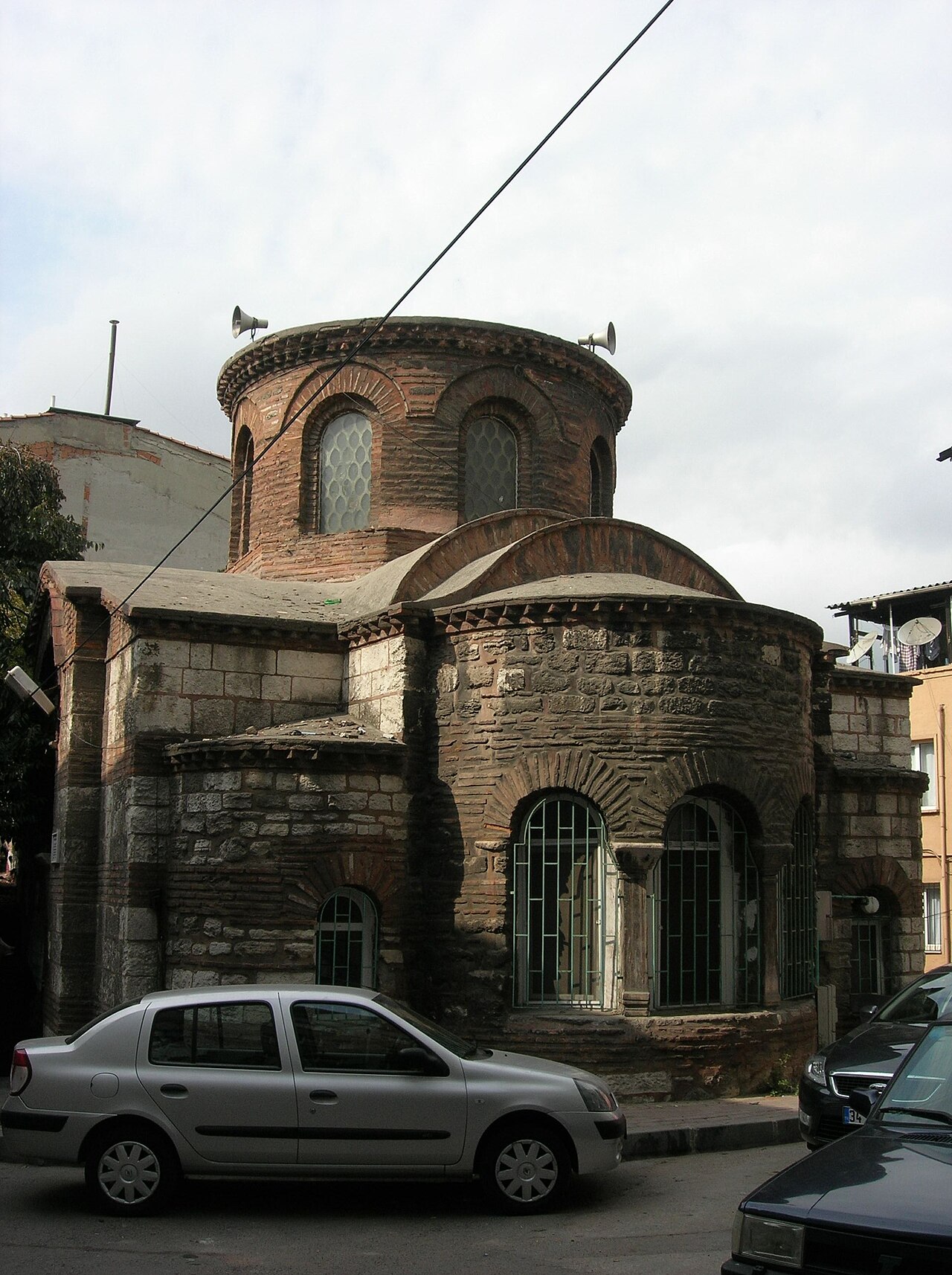

- اليوم
- ساعات العمل غير مسجلة
- مدة الزيارة
- 20 د
- إمكانية الوصول
- غير مسجّل
- السعر
- غير مسجّل
- المكانة
- يجب رؤيته
- رتبة
- الرتبة 110 من 8,218
نبذة عن Hirami Ahmed Pasha Mosque
Hirami Ahmed Pasha Mosque was the Byzantine church of Saint John the Forerunner by-the-Dome — Hagios Ioannis ho Prodromos en tō Trullō — one of thirty-six churches in Constantinople dedicated to John the Baptist, and the church of a monastery of the same name. Its construction style dates it to the twelfth century, and it is the smallest Byzantine church of Constantinople still standing.
Its later Byzantine history is bound up with its neighbour. When the Patriarchate moved between 1454 and 1456, nuns displaced by the move were sent to the small nunnery of Troullos, which was probably founded on that occasion — the reason a building this modest survived at all.
The conversion came late in the sixteenth century. Hirami Ahmed Pasha, previously Agha of the Janissaries under Murad III, turned the church into a mosque some time between 1587 or 1588 and 1598, the year of his death. It was restored and reopened to Islamic worship in 1961 and functions as a neighbourhood mosque today.
One honest caveat belongs in any account of it: the building has never been the subject of a systematic study. What is known about it is thinner than what is known about almost any comparable structure in the city, and that is part of what makes standing in it interesting.
تم التحقق 2026-08-24 · المصدر
ماذا يوجد بالداخل
Very little, and that is the visit. The plan is cross-in-square beneath a dome, with four columns and their capitals carrying an octagonal drum — the compact middle-Byzantine formula executed at the smallest scale it survives at anywhere in the city. The whole building is only about fifteen metres long including the narthex, which is to say roughly the footprint of a large room.
The columns are the thing to look at. In a church this small the four supports are close enough together that the central space reads almost as a canopy rather than as a nave, and the octagonal drum sitting on them gives the interior its whole character. Whatever mosaic or marble the church once carried is gone.
What has been added is the furniture of a working mosque — carpet, a mihrab set into the eastern wall where the Byzantine sanctuary was, a minbar, and the ordinary fittings of a neighbourhood congregation. That layering is the honest subject here: not a preserved Byzantine interior but a twelfth-century shell that has been in continuous religious use for eight hundred years and looks it.
Come for the structure and the scale. There is no decorative programme to decode.
تم التحقق 2026-08-24 · المصدر
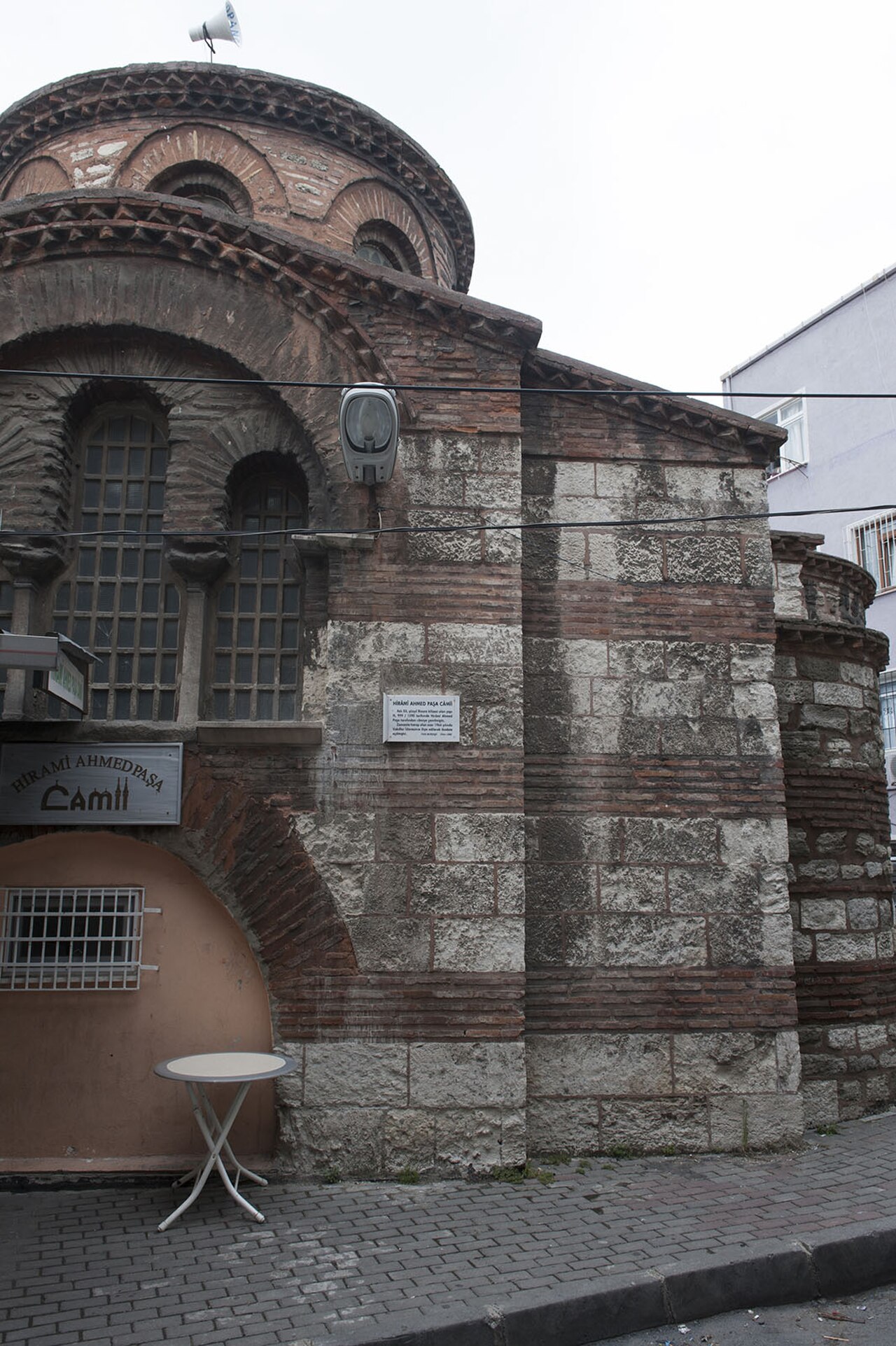

المدة المقترحة للزيارة
Twenty minutes, as recorded. The building is fifteen metres long; there is no gallery, no crypt, no treasury and no decorative scheme, so the interior is a matter of standing under the drum, looking at the four columns and reading the space.
Give the exterior as much time as the inside. The dome and drum seen from the street tell you more about the twelfth-century building than the plastered interior does, and walking the block to see it from two or three angles is genuinely part of the visit rather than filler.
As at Bodrum Mosque, the binding constraint is access rather than content. If the door is open, twenty minutes is comfortable and forty would be padding. If it is shut, ten minutes outside is what the trip yields — which is why this is a place to fold into a Çarşamba walk and not a place to make a special journey for.
تم التحقق 2026-08-24


الموسم والحشود
No visiting timetable is published and none is recorded here. This is a small working mosque under the Diyanet, whose mosque directory is an internal application that cannot be read publicly, and the Fatih municipality's mosque directory does not list this building at all.
Of the converted Byzantine churches in this part of the city, this is the one most often found locked between prayers. It has a small local congregation, no warden and no visitor programme, so the door follows the five daily prayers and the caretaker's discretion — and prayer times move through the year, so there is no fixed hour to plan against. Look up the day's timetable and aim to arrive shortly before a prayer rather than at a round hour.
Avoid the Friday midday congregation, which fills a building this size instantly. Çarşamba's weekly market brings crowds to the surrounding streets on Wednesdays, which is atmospheric but slow going. A weekday mid-morning, close to a prayer time, is the best combination of an open door and an empty room.
تم التحقق 2026-08-24
التذاكر
No operator publishes an admission position for this mosque — not the Diyanet, not the Fatih municipality, not the General Directorate of Foundations — so none is recorded here. There is no ticket, no counter and no warden; there is a door that is either open or locked.
That distinction matters for planning. Nearby Fethiye Museum, the Pammakaristos, is a ticketed monument with published hours and staff, and it is easy to assume its neighbour works the same way. It does not. Hirami Ahmed Pasha is a working neighbourhood mosque with none of that infrastructure, and no source states a fee or the absence of one for it.
If a caretaker opens the building for you, a small voluntary contribution to the mosque box is the ordinary courtesy, not a charge. Nothing is owed.
تم التحقق 2026-08-24


الوصول إلى هناك
The mosque is on Koltukçu Sokak in Çarşamba, in the Fatih district, less than four hundred metres south of the Pammakaristos complex — the Fethiye Mosque and Museum — which is the landmark to navigate by.
The practical approach is from the Golden Horn. Buses and ferries serve Fener and Balat on the shore, and from there it is a steep climb inland and uphill through the old streets to the Çarşamba plateau. It is a proper ascent, not a stroll, and it is the reason most visitors arrive here having already walked a long way.
From the historic peninsula the alternative is a bus along Fevzi Paşa Caddesi towards Edirnekapı and a walk down, which trades the climb for a longer flat approach.
Whichever way you come, plan the visit as a pair with Fethiye. The two buildings are minutes apart, one is open and ticketed and one is not, and walking the two together is the natural Çarşamba itinerary — going all that way for the smaller and less certain of the two alone makes little sense.
تم التحقق 2026-08-24


ما يجب الحذر منه
Expect a locked door. Of the three converted mosques in this batch, this is the one most reliably shut outside prayer times, and the honest advice is to treat the interior as a bonus and the exterior as the visit. If you want in, arriving shortly before a prayer and waiting is more effective than knocking.
Finding it is the second difficulty. This is a residential street with no monumental frontage and little signage; a fifteen-metre building among apartment blocks does not announce itself, and it is easy to walk the length of Koltukçu Sokak without registering it. Navigate to Fethiye first and work south from there.
Çarşamba is a conservative religious neighbourhood, considerably more so than the tourist quarters, and dress expectations on the street are stricter than they are in Sultanahmet. Modest clothing before you reach the door, not at it, is the courteous approach, and photographing residents — women particularly — without asking is not welcome.
The lanes are steep and cobbled, poorly lit after dark, and hard going in wet weather. Sensible shoes are not optional on this walk.
تم التحقق 2026-08-24


التصوير الفوتوغرافي
The exterior is the photograph, both because it is what you can reliably access and because the dome and drum are the most legible Byzantine survival on the building. Find an angle across the street that gives you the drum clear of the surrounding rooflines — on a street this narrow that usually means backing up to the far pavement and shooting slightly upward.
Morning light is the practical choice. The lanes are narrow and the buildings around are taller than the mosque, so for much of the day it sits in shade; the hour or two after sunrise, when the light comes in low along the street, is when the masonry has any modelling at all. Midday puts the whole thing in a hole.
Inside, if you are admitted, the shot is the four columns and the octagonal drum above them, taken from a corner rather than the centre so the supports overlap and give the tiny space some depth. Straight-on it looks like a plain room.
Ask before photographing anyone. In this neighbourhood that is not a formality, and a refused request is refused.
تم التحقق 2026-08-24
الأسئلة الشائعة
What are the opening hours?
None are published. It is a small working mosque under the Diyanet, whose mosque directory is not publicly readable, and the Fatih municipality's mosque list does not include it. The door follows the five daily prayers and is often locked between them — of the converted Byzantine churches in this district it is the one most often found shut.
Is there an admission charge?
No operator publishes a fee or a statement of free entry, so nothing is recorded here. There is no ticket counter and no warden. Do not confuse it with the ticketed Fethiye Museum a few hundred metres north.
What was the building before it was a mosque?
The Byzantine church of Saint John the Forerunner by-the-Dome, one of thirty-six churches in Constantinople dedicated to John the Baptist and part of a monastery of the same name. Its construction style dates it to the twelfth century.
Who converted it and when?
Hirami Ahmed Pasha, formerly Agha of the Janissaries under Sultan Murad III, converted the church into a mosque between 1587 or 1588 and 1598, the year of his death. It was restored and reopened to Islamic worship in 1961.
How big is it?
Only about fifteen metres long including the narthex, which makes it the smallest Byzantine church of Constantinople still standing. The plan is cross-in-square, with four columns and their capitals carrying an octagonal drum beneath the dome.
Is it worth a special trip?
On its own, no. It is a twenty-minute visit that may find the door locked. Pair it with the Pammakaristos — Fethiye Mosque and Museum — which stands less than four hundred metres north and is open and ticketed; walking the two together is the natural Çarşamba itinerary.
أين هو
جاري تحميل الخريطة التفاعلية…
تعذر تحميل الخريطة التفاعلية.
قريب
ضعها في خطة
روابط خارجية
آخر تحديث:
المصدر: مساهمو OpenStreetMap, Wikidata ·