

5 dk yürüyüş · Градска општина Савски венац
Toma Rosandić Müzesi
- Yüksek · Miras alanı
- Müze
Dil · 11 yayınlandı
Müze · Градска општина Савски венац, Belgrad
Кућа Краља Петра
| Pazartesi | 12:00 – 18:00 |
|---|---|
| Salı | 12:00 – 18:00 |
| Çarşamba | 12:00 – 18:00 |
| Perşembe | 12:00 – 18:00 |
| Cuma | 12:00 – 18:00 |
| Cumartesi | 10:00 – 14:00 |
| Pazar | 10:00 – 14:00 |
2026-09-02 kontrol edildi · Kaynak
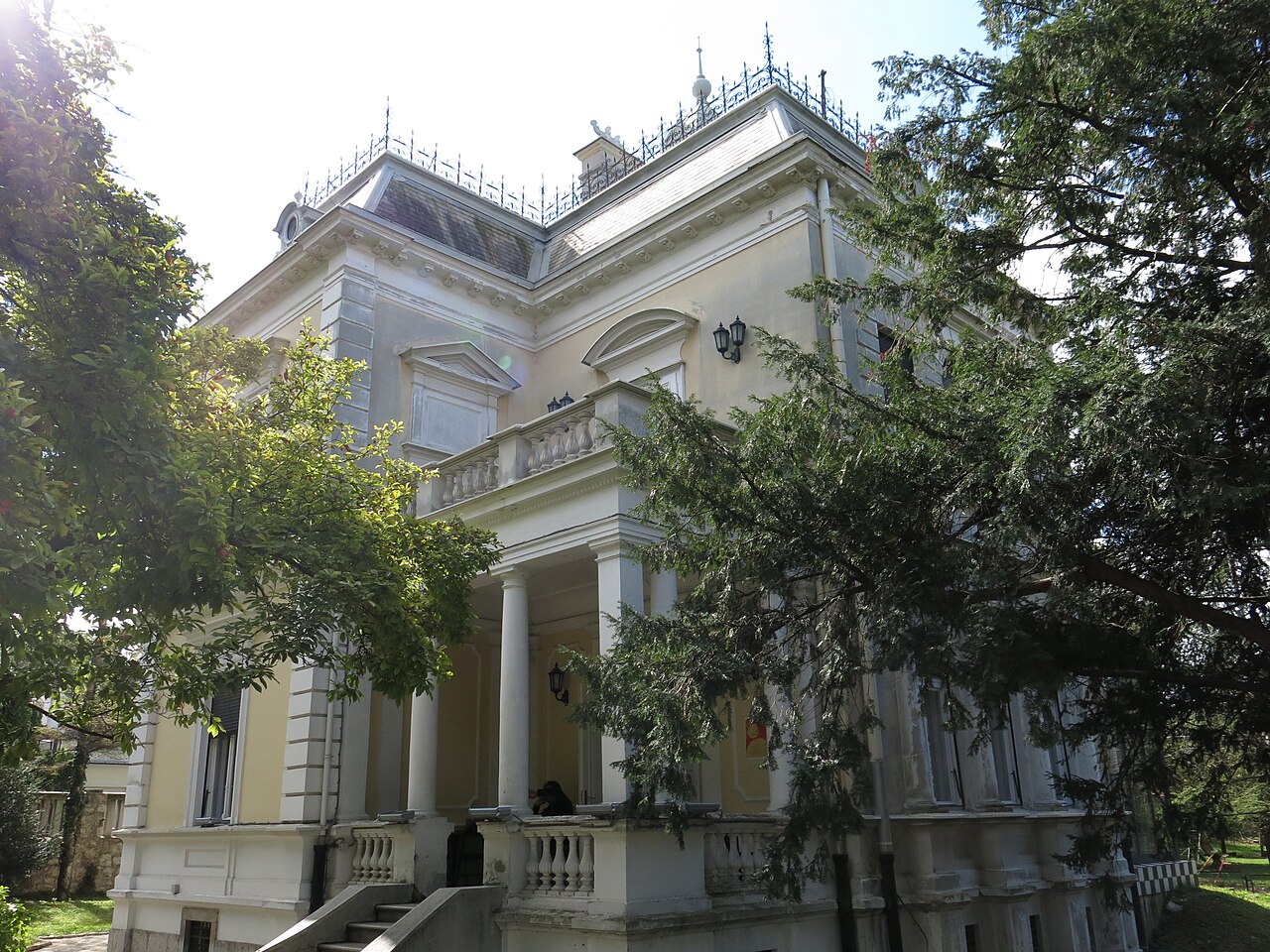
House of King Peter I of Serbia is a historic villa in Senjak with a specific royal history. Built in 1896 as a country villa for Belgrade merchant Đorđe Pavlović, the house later became the residence of King Peter I, who moved in on 24 September 1919 and stayed until 16 August 1921. Its identity comes from that change of role: this was a merchant’s villa connected to a monarch, not a purpose-built palace. Today the building functions as a memorial and cultural venue within Dečji kulturni centar Majdan, giving the residence an active place in Savski venac’s cultural life. It was built in 1896 as a country villa for Belgrade merchant Đorđe Pavlović. He moved in on 24 September 1919 and lived there until 16 August 1921. The memorial room is on the first floor and was King Peter I’s bedroom. It was built in 1896 as a country villa for Belgrade merchant Đorđe Pavlović. He moved in on 24 September 1919 and lived there until 16 August 1921.
2026-09-02 kontrol edildi · Kaynak
The permanent exhibition is centred on the memorial room on the first floor, which was King Peter I’s bedroom. The display includes portraits, two reconstructed uniforms and the Historical Portrait mosaic, assembled from hundreds of photographs. The arrangement connects an actual room associated with the king to objects representing his public and military image. The house has three levels, while its wider cultural programme brings temporary exhibitions, concerts, literary evenings, theatre performances, and creative and educational workshops into the same historic setting.
2026-09-02 kontrol edildi · Kaynak
Allow around 45 to 60 minutes for the house and permanent memorial display. That gives enough time to see the first-floor bedroom, portraits, reconstructed uniforms and Historical Portrait mosaic without reducing the visit to a rushed checklist. Visitors interested in the villa itself may stay longer to notice the three-level layout and the relationship between domestic rooms and royal memory. A temporary exhibition, concert, literary evening, theatre performance, or workshop requires additional time. The house also works well as one stop during a broader walk through Senjak.
2026-09-02 kontrol edildi · Kaynak
The operator lists visiting hours of 12:00–18:00 from Monday to Friday and 10:00–14:00 on Saturday and Sunday. Weekday afternoons provide the longest regular window, while weekend mornings are the natural choice before lunch. The building is also an operating cultural centre, so temporary exhibitions, concerts, performances, literary evenings, and workshops can influence the atmosphere and room use. Visitors planning around a named programme should consult the operator’s event information as well as the regular timetable.
2026-09-02 kontrol edildi · Kaynak
This guide therefore makes no ticket claim. The distinction matters because the building contains a permanent memorial while also hosting temporary exhibitions and public cultural programmes. Those activities belong to the venue’s changing schedule, whereas the historical significance of the memorial room and its displays can be described independently of any unverified admission arrangement.
2026-09-02 kontrol edildi · Kaynak
The address is Vase Pelagića 40 in Senjak, Belgrade. The operator lists GSP line 44, buses 40 and 41 for Ortopedski zavod, 17 and 18 for Mostar, and 23, 37, 52, 53, 56 and 88 for Sajam and Ruska. These are approach points rather than a guarantee of a stop directly beside the entrance, so allow time for the final walk through Senjak. The operator identifies nearby parking as limited, making public transport or taxi travel more predictable for a timed visit.
2026-09-02 kontrol edildi · Kaynak
The operator records limited step-free access. The memorial room is on the first floor, and the three-level house includes a narrow cast-iron staircase between the first floor and attic, so the building is not presented as a fully step-free visit. Nearby parking is also limited. As an active cultural venue, the house may feel busier or have rooms arranged for a temporary exhibition, concert, theatre performance, or workshop. These features are worth considering when choosing transport, timing and the expected pace of the visit.
2026-09-02 kontrol edildi · Kaynak
The most distinctive subjects are the first-floor memorial room, King Peter I’s former bedroom, the portraits, the two reconstructed uniforms, and the Historical Portrait mosaic made from hundreds of photographs. The villa’s three-level arrangement and narrow cast-iron staircase also express the character of a historic residence adapted for cultural use. Focus on architectural details and the mosaic rather than treating the house as a generic royal backdrop. Photography should remain considerate in memorial and exhibition spaces, especially when a temporary exhibition or live cultural programme is taking place.
2026-09-02 kontrol edildi · Kaynak
It was built in 1896 as a country villa for Belgrade merchant Đorđe Pavlović.
He moved in on 24 September 1919 and lived there until 16 August 1921.
The memorial room is on the first floor and was King Peter I’s bedroom.
It includes portraits, two reconstructed uniforms and the Historical Portrait mosaic made from hundreds of photographs.
The cultural centre hosts temporary exhibitions, concerts, literary evenings, theatre performances, and creative and educational workshops.
Since 2013, it has been part of Dečji kulturni centar Majdan, a cultural institution of the Savski venac municipality.
Etkileşimli harita yükleniyor…
Etkileşimli harita yüklenemedi.

Son güncelleme:
Kaynak: OpenStreetMap katkıda bulunanları, Wikidata ·