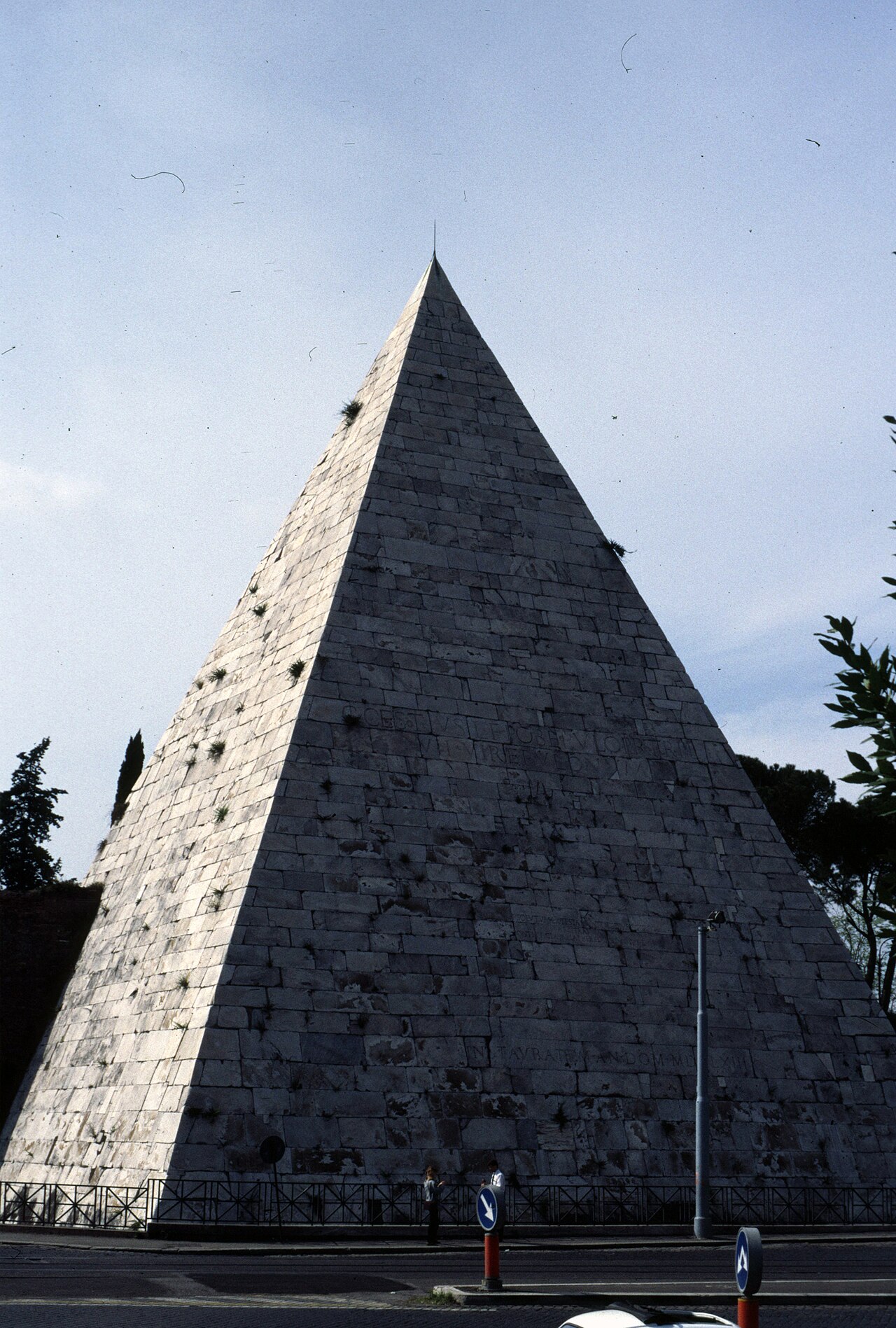
The Pyramid of Cestius is an ancient Roman pyramid in Rome, Italy. Built as a tomb for Gaius Cestius, a Roman magistrate, it dates to approximately 18–12 BCE. The structure stands near the Porta San Paolo and was incorporated into the Aurelian Walls in the 3rd century CE. Its Egyptian-inspired design reflects the period's fascination with Egypt following Rome's conquest. The pyramid is constructed of brick-faced concrete covered with white marble. It remains one of Rome's most distinctive and well-preserved ancient monuments, offering visitors a striking contrast to the city's more common classical architecture.
The interior of the Pyramid of Cestius contains a burial chamber. The chamber was decorated with frescoes, though these are not regularly accessible to the public. The pyramid's construction includes a vaulted ceiling in the burial chamber. Due to limited access, most visitors experience the monument from the exterior. The structure's integration into the city walls means that portions of the original monument are now adjacent to later defensive fortifications. Interior visits require special arrangements and are not part of standard public access. Visitors should expect to appreciate the pyramid primarily from outside, examining its marble facing and architectural proportions.
A visit to the Pyramid of Cestius typically requires 15 to 30 minutes for exterior viewing and photography. The monument occupies a compact site with limited surrounding space for extended exploration. Visitors often combine this stop with nearby attractions, including the Protestant Cemetery and the Porta San Paolo. The adjacent Aurelian Walls and gate structures add contextual interest. Those interested in architectural detail may spend additional time examining the marble inscriptions and construction techniques. The brevity of a standalone visit makes this suitable as a brief stop within a broader itinerary of the Ostiense or Testaccio districts.
Operator-confirmed hours are Not recorded pending review. The Pyramid of Cestius is an outdoor monument visible from public spaces at all times. Exterior viewing does not depend on official opening schedules. Visitors may encounter varying light conditions throughout the day, with morning and late afternoon offering favorable illumination for photography. The site experiences typical Rome tourist patterns, with higher visitor presence during peak summer months. Weather considerations apply to outdoor viewing comfort. Seasonal variations in daylight hours affect evening visibility. Visitors should consult current local sources for any changes to access conditions or special arrangements that may become available.
Operator-confirmed prices are Not recorded pending review. Exterior viewing of the Pyramid of Cestius from public areas does not require admission. The monument stands at a street intersection and is visible without entering controlled spaces. Any interior access or guided tours would involve separate arrangements not covered by standard public access. Visitors should verify current conditions through official channels before planning dedicated visits. No advance booking is typically necessary for exterior appreciation. Nearby attractions may have independent fee structures. Visitors should carry standard urban exploration supplies and plan for incidental expenses in the surrounding area.
The Pyramid of Cestius is located near Porta San Paolo in the Ostiense district. The Piramide Metro station on Line B serves the area. Regional trains also stop at Roma Porta San Paolo station adjacent to the site. Multiple bus routes operate in the vicinity. The monument stands at a visible intersection, making it identifiable on foot from transit stops. Walking from central Rome locations is feasible for active visitors, though distances should be considered. Bicycle and scooter rentals are available in the city. Visitors should consult current transit schedules and route maps for specific connections.
Traffic flows around the Pyramid of Cestius at busy intersections, requiring pedestrian awareness. The monument sits on a traffic island with limited protective barriers. Surrounding streets carry significant vehicle movement, especially during rush periods. The adjacent railway and metro infrastructure generates pedestrian congestion at peak times. Weather exposure is complete; no shelter exists at the monument itself. Visitors should remain vigilant with personal belongings in transit-heavy areas. The marble surface may become slippery in wet conditions. Nighttime visibility depends on street lighting. The Protestant Cemetery nearby has separate visiting protocols that should be respected.
Photography rules are Not recorded pending review. The Pyramid of Cestius is publicly visible and commonly photographed from surrounding streets and sidewalks. The compact site and traffic patterns influence available angles. Morning light illuminates the marble facing from one direction, while afternoon offers reversed conditions. The adjacent Aurelian Walls provide compositional context. Tripod use in public thoroughfares may require caution regarding pedestrian and vehicle flow. Drone operation would fall under Italian aviation regulations and urban restrictions. Visitors should exercise discretion regarding cemetery boundaries if photographing from adjacent areas. Commercial photography may involve additional considerations.
2026-08-28 kontrol edildi
Sık sorulan sorular
Can you enter the Pyramid of Cestius for Pyramid of Cestius in Rome?
Interior access is limited and not part of standard public visitation. Most visitors experience the monument from the exterior only.
How old is the Pyramid of Cestius for Pyramid of Cestius in Rome?
The pyramid was built approximately 18–12 BCE, making it roughly two thousand years old.
Why does Rome have an Egyptian pyramid for Pyramid of Cestius in Rome?
The pyramid reflects Roman fascination with Egyptian culture following Egypt's conquest, adapted for a Roman burial context.
Is the Pyramid of Cestius near the Colosseum for Pyramid of Cestius in Rome?
The pyramid is located in the Ostiense district, southwest of the historic center, not in immediate proximity to the Colosseum.
What is the Protestant Cemetery for Pyramid of Cestius in Rome?
The Non-Catholic Cemetery, located nearby, is a historic burial ground containing graves of notable figures; it is separate from the pyramid site.
Was the pyramid always part of the city walls for Pyramid of Cestius in Rome?
The pyramid was incorporated into the Aurelian Walls during their construction in the 3rd century CE, not originally built as part of fortifications.
Kaynak:
OpenStreetMap katkıda bulunanları, Wikidata
·
Çerez tercihleri
İzin gereken bölgelerde, siz seçim yapmadan önce zorunlu olmayan hiçbir şey ayarlanmaz. Reddetmeniz durumunda reklamlar yine görünür ancak kişiselleştirilmemiş olur ve analitik tamamen kapatılır.


_-_2021-08-29_-_3.jpg)
