
4 dk yürüyüş
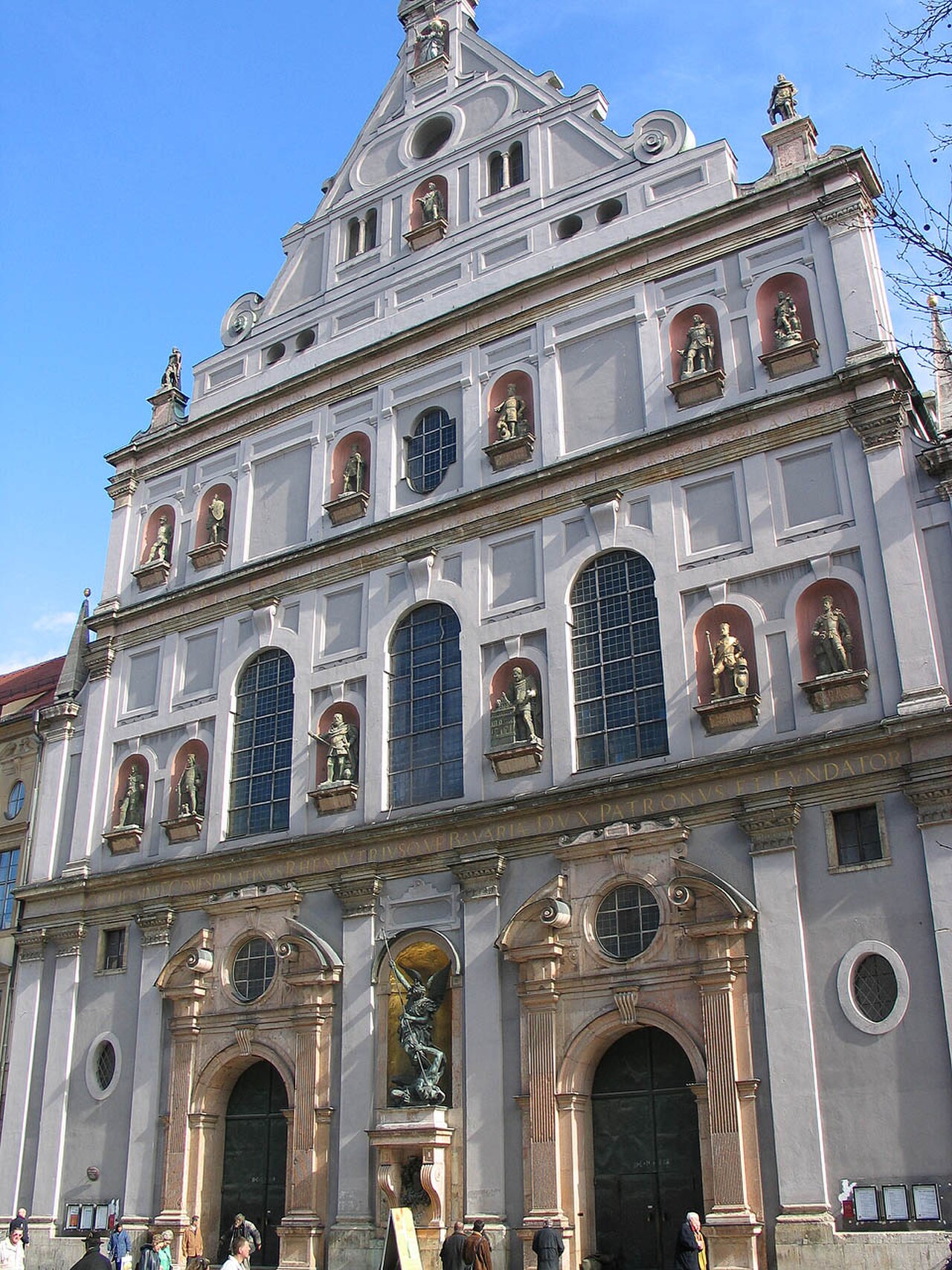
Sankt Michael
- Yüksek · Miras alanı
- İbadet yeri
Dil · 11 yayınlandı
Tarihi anıt · Münih
Wittelsbacher Brunnen

The Wittelsbacherbrunnen is a monumental fountain located on Lenbachplatz in Munich, Germany. It was created by the sculptor Adolf von Hildebrand and inaugurated in 1895. The fountain depicts scenes from Bavarian history and mythology, with bronze figures arranged around a central granite basin. It stands as one of Munich's significant nineteenth-century public monuments and represents the Wittelsbach dynasty, Bavaria's ruling house for over seven centuries. The work exemplifies the transition from neoclassicism to more naturalistic approaches in German monumental sculpture of the period.
2026-08-28 kontrol edildi
The fountain features multiple bronze sculptural groups set upon a substantial granite base. Central figures include representations of Bavarian rulers and symbolic personifications. Water flows through designed channels into surrounding basins. The monument occupies a prominent position on Lenbachplatz, near other notable architectural landmarks including the Justizpalast. The surrounding plaza provides pedestrian access and viewing space. The sculptural program combines historical narrative with allegorical elements typical of civic monuments from the German Empire era. Conservation of the bronze surfaces and water systems requires ongoing maintenance by municipal authorities.
2026-08-28 kontrol edildi
A visit to the Wittelsbacherbrunnen typically requires fifteen to thirty minutes for observation and circumambulation of the monument. The fountain serves primarily as a pass-through destination rather than an extended-visit attraction. Most visitors incorporate it into broader walking tours of Munich's historic core, combining it with nearby Königsplatz, the Old Town, or museum visits. The duration depends on individual interest in sculptural detail and photographic documentation. Evening visits may extend slightly when illumination highlights the bronze surfaces. No guided tours or interpretive services are attached specifically to this monument.
2026-08-28 kontrol edildi
The Wittelsbacherbrunnen is an outdoor public monument accessible at all hours year-round. Seasonal variations affect the visitor experience: fountain water flows during warmer months, while winter may see reduced operation or protective measures. The monument offers different atmospheric qualities across seasons, from summer greenery to winter snow accumulation on sculptural surfaces. Evening artificial lighting creates distinct visual effects. Visitors should check current local conditions before planning dedicated visits, as maintenance activities or public events on Lenbachplatz may occasionally affect immediate access. Check the operator's own site for the travel date before relying on a schedule or fare.
2026-08-28 kontrol edildi
No admission fee applies to viewing the Wittelsbacherbrunnen, as it stands in a public square. No ticketing infrastructure exists at the site. Visitors encountering requests for payment for fountain access should treat these with caution. Standard urban parking fees may apply in surrounding areas for those arriving by private vehicle. The monument forms part of Munich's public realm and is maintained through municipal taxation rather than visitor revenue. Commercial photography permits for professional use may involve separate city administrative procedures. Check the operator's own site for the travel date before relying on a schedule or fare.
2026-08-28 kontrol edildi
The Wittelsbacherbrunnen sits on Lenbachplatz, accessible via Munich's public transportation network. Nearby U-Bahn stations include Königsplatz and Karlsplatz-Stachus, each requiring several minutes of walking. Multiple tram lines serve adjacent streets. The location lies within Munich's compact historic center, making it reachable on foot from major attractions including Marienplatz and the Hauptbahnhof. Cyclists may use designated paths, though dedicated bicycle parking at the fountain itself is Not recorded. Drivers should note that central Munich has significant traffic restrictions and parking limitations. The exact optimal access route depends on origin point and time of day.
2026-08-28 kontrol edildi
Visitors should exercise standard urban awareness around the fountain basin edges, which may become slippery when wet. Bronze surfaces can prove unexpectedly sharp at close inspection. The monument's location on a traffic-adjacent plaza requires attention to vehicles and cyclists at crossing points. Water spray may affect camera equipment during active fountain operation. No permanent security presence is evident; personal belongings require normal vigilance. The granite surfaces show natural weathering patterns that may create uneven footing. Nighttime illumination, while enhancing appearance, produces shadowed areas where visibility decreases. The monument's cultural significance warrants respectful behavior from all visitors.
2026-08-28 kontrol edildi
The Wittelsbacherbrunnen permits unrestricted photography from public vantage points. Optimal angles require movement around all sides due to the sculptural program's multi-directional design. Morning and late afternoon light reduce harsh shadows on bronze surfaces. Overcast conditions minimize contrast problems with dark metal against lighter stone. Water movement during active operation adds dynamic elements but requires faster shutter speeds. The surrounding buildings, including the Justizpalast dome, occasionally appear in background compositions. Tripod use in the plaza may attract security attention; discrete operation advised. Night photography benefits from artificial illumination but presents white-balance challenges with mixed light sources.
2026-08-28 kontrol edildi
Artificial illumination of the monument has been observed, though specific operational schedules are Not recorded.
Check the operator's own site for the travel date before relying on a schedule or fare.
No dedicated tour services for this monument are recorded; visitors typically engage with it independently.
Physical interaction is not prohibited by visible barriers, though preservation considerations suggest restrained contact.
Permanent seating infrastructure specifically associated with the monument is Not recorded.
Conservation history for this 1895 monument is Not recorded in available sources, though bronze fountains typically require periodic intervention.
Etkileşimli harita yükleniyor…
Etkileşimli harita yüklenemedi.
Son güncelleme:
Kaynak: OpenStreetMap katkıda bulunanları, Wikidata ·