
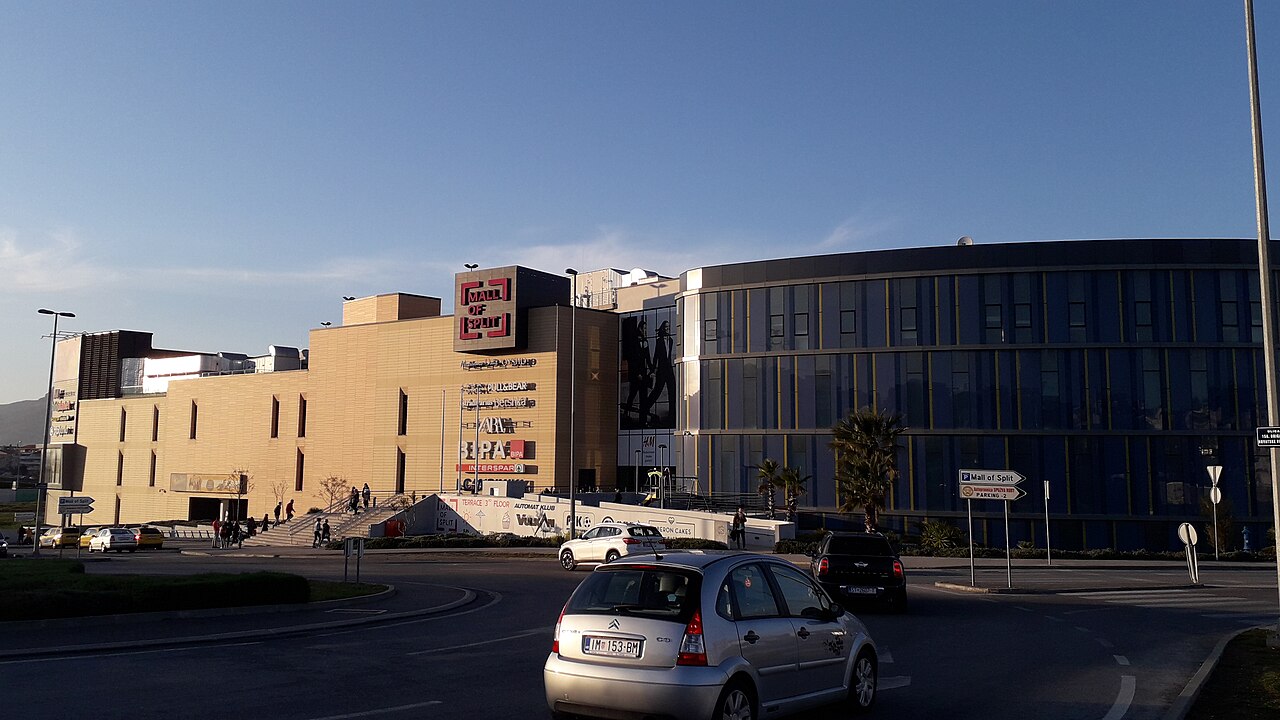
10 dk yürüyüş
Mall of Split
- Dikkate değer
- Pazar
Dil · 11 yayınlandı
Tarihi anıt · Split
Dioklecijanov akvadukt

The Diocletianus Aqueduct is a Roman aqueduct built during the reign of Emperor Diocletian in the late 3rd or early 4th century CE to supply water to his palace at Split. The structure extended from the Jadro River near Solin to the palace complex, spanning approximately nine kilometers. Portions of the original construction remain visible today, representing significant ancient engineering. The aqueduct formed part of the broader infrastructure serving Diocletian's retirement residence, one of the most substantial Roman palace complexes on the Adriatic coast. Its survival offers tangible connection to imperial Roman water management systems.
2026-08-28 kontrol edildi
Visible remains include sections of the arched channel structure at various points along the original route. The best-preserved portions feature characteristic Roman construction with stone arches supporting the water channel. Some sections demonstrate later modifications and repairs across historical periods. The aqueduct channel itself was designed with precise gradient to maintain water flow by gravity. Structural elements reveal Roman engineering techniques for water transport. Visitors can observe construction details including arch spans, channel specifications, and foundation methods. The relationship between surviving portions and the original full extent requires careful interpretation. Not all original elements remain accessible or identifiable.
2026-08-28 kontrol edildi
A complete visit to observable aqueduct sections requires variable time depending on which portions visitors choose to examine. Multiple fragmentary remains exist at separate locations rather than one continuous accessible site. Individual sections may be viewed briefly, while comprehensive examination of all known remnants demands extended exploration across Split and surrounding areas. The original structure spanned considerable distance, so no single visit captures the full aqueduct. Photography and careful observation at each accessible point adds time. Visitors should allocate flexible scheduling. The experience differs fundamentally from contained museum visits due to dispersed nature of remains.
2026-08-28 kontrol edildi
The aqueduct remains exist as open-air archaeological features at multiple locations without centralized management or uniform visiting constraints. Different sections may be subject to varying local conditions, lighting, and accessibility throughout the year. Weather conditions affect comfort and visibility for outdoor examination. Croatian coastal climate brings hot summers and mild winters, with potential rain in transitional seasons. Visitors should verify specific conditions for intended sections before travel. No confirmed seasonal programming, guided tour schedules, or special opening arrangements are documented from authoritative sources. Check the operator's own site for the travel date before relying on a schedule or fare.
2026-08-28 kontrol edildi
The dispersed nature of aqueduct remains means no single ticketing system applies. Some observable sections may be freely accessible in public spaces, while others could fall within managed properties with separate arrangements. No comprehensive fee structure is documented. Visitors should not assume payment requirements or absence thereof without local verification. Potential costs may include transportation between scattered locations, guided services if available, or associated site admissions where remnants adjoin other attractions. Budget planning requires on-site flexibility pending confirmed current arrangements from authoritative local sources. Check the operator's own site for the travel date before relying on a schedule or fare.
2026-08-28 kontrol edildi
The aqueduct remains are distributed across multiple locations between Solin and Split, requiring transportation planning. The Jadro River source area lies near Solin, northeast of central Split. Various sections appear in urban and peri-urban environments. Public bus connections serve broader Split-Solin corridor. Walking routes connect some central Split locations to nearby remnants. Private vehicle or taxi provides flexibility for dispersed examination. Specific section locations should be identified before departure using reliable mapping resources. The OpenStreetMap relation data indicates geographic extent. Local tourist information may assist with current access routes to observable portions. No dedicated aqueduct visitor transportation is documented.
2026-08-28 kontrol edildi
Traffic hazards affect examination of roadside sections. Uneven terrain and deteriorated structural conditions present physical risks at archaeological remains. No documented safety infrastructure or barriers are confirmed for all locations. Weather exposure demands appropriate preparation. Legal access boundaries may be unclear at some points; respect private property where applicable. Structural instability of ancient masonry requires cautious approach. No confirmed emergency services or facilities are dedicated to aqueduct sites. Night visibility is limited without artificial lighting. Visitors should exercise standard precautions for unstaffed archaeological locations and verify current local conditions before independent exploration.
2026-08-28 kontrol edildi
Photographic opportunities vary significantly by section and conditions. Stone arch constructions offer architectural detail subjects. Contextual shots establishing relationship to modern surroundings document historical layering. Morning and evening light may enhance texture visibility on masonry surfaces. Wide-angle lenses accommodate structural scale in confined spaces. Some sections may be partially obscured by vegetation or modern development. Tripod use depends on specific location permissions and practical space. No confirmed restrictions are documented, but standard respect for archaeological integrity applies. Overcast conditions reduce harsh shadow contrast on stone surfaces. Drone operation requires verification of Croatian regulations and local permissions.
2026-08-28 kontrol edildi
Not recorded. The original structure is fragmentary and interrupted by modern development. No continuous accessible route following the full alignment is documented.
Visitors may find general historical tours of Split that mention the aqueduct. Check the operator's own site for the travel date before relying on a schedule or fare.
Not recorded. Attribution to Diocletian's reign in the late 3rd or early 4th century CE represents scholarly association rather than precisely documented construction date.
Not recorded. Physical access conditions vary by section. Safety considerations and preservation concerns likely restrict interior channel access at preserved portions.
Not recorded. No dedicated interpretive facility is documented. Remains exist as dispersed archaeological features without centralized visitor infrastructure.
The aqueduct supplied water to the palace complex as part of its operational infrastructure, representing integrated Roman urban planning for the imperial residence.
Etkileşimli harita yükleniyor…
Etkileşimli harita yüklenemedi.

Son güncelleme:
Kaynak: OpenStreetMap katkıda bulunanları, Wikidata ·