.JPG)

.jpg)
.jpg)


1 dk yürüyüş · Innere Stadt
Franz-Stephan-Denkmal
- Yüksek · Miras alanı
- Tarihi anıt
Dil · 11 yayınlandı
Tarihi anıt · Innere Stadt, Viyana
Mozart-Denkmal

| Pazartesi | 00:00 – 23:59 |
|---|---|
| Salı | 00:00 – 23:59 |
| Çarşamba | 00:00 – 23:59 |
| Perşembe | 00:00 – 23:59 |
| Cuma | 00:00 – 23:59 |
| Cumartesi | 00:00 – 23:59 |
| Pazar | 00:00 – 23:59 |
OpenStreetMap açılış saatlerinden 2026-08-25 tarihinde ayrıştırıldı.
OpenStreetMap erişim etiketlerinden okunur; listede olmayan için kayıtlı etiket yoktur.
Planlayıcıda grup türünü aile seçtiğinizde gün penceresi tek kişilik bir günün yaklaşık dörtte üçüne iner.
The Mozart Monument (Mozartdenkmal) is a marble memorial to the composer Wolfgang Amadeus Mozart, standing in the Burggarten, the former private garden of the Hofburg palace in Vienna's Innere Stadt. Sculptor Viktor Tilgner designed it and it was unveiled in 1896, thirteen years after his death, showing Mozart in the dress of his own century on a tall pedestal above a relief of characters from his operas, with a cherub beside them holding a lyre. The monument did not start in the Burggarten: it stood on Albertinaplatz, beside the Albertina museum, until wartime bomb damage to the area forced its removal and restoration, after which the city placed it in its present spot in 1953. It is one of several composer monuments set into central Vienna's public gardens, alongside the Johann Strauss statue in the Stadtpark and the Beethoven monument on Beethovenplatz, and the least visited of the three despite standing closest to the Hofburg. Tilgner died the same year the monument was unveiled, and it is counted among his best-known public works in the city he spent most of his career in.
2026-08-23 kontrol edildi · Kaynak
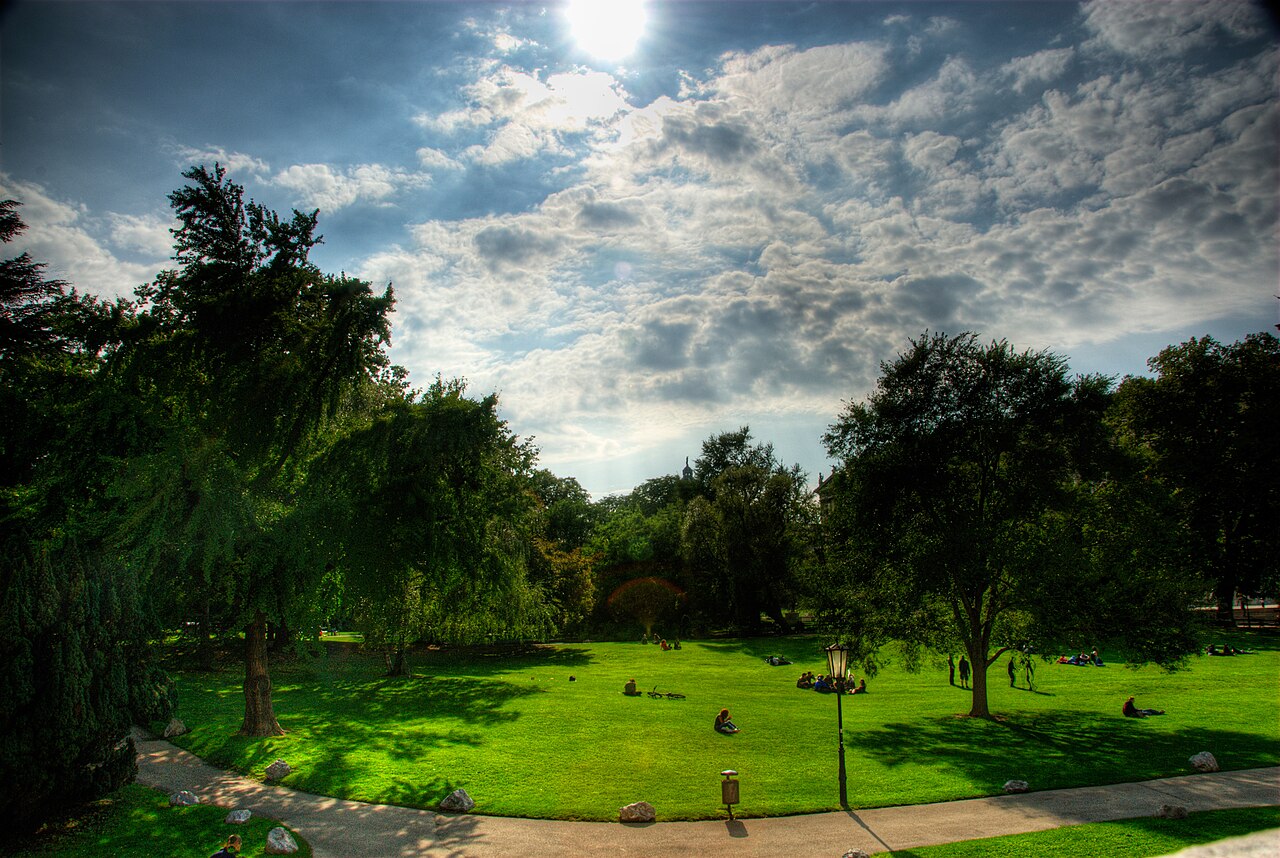
There is no interior to visit: the monument is an outdoor sculpture group set on a gravel bed at the centre of the Burggarten's main lawn, facing the Hofburg's Aeusseres Burgtor gate. The relief below Mozart's standing figure depicts Don Giovanni and other opera characters, and the flowerbed at the foot of the pedestal is replanted each season in the shape of a treble clef, the detail almost every visitor stops to photograph. The Burggarten around it holds the Palm House glasshouse restaurant, the Schmetterlinghaus butterfly house inside part of the same glasshouse, and statues of Emperor Franz Joseph and Goethe within a few minutes' walk of the Mozart figure. The garden itself was laid out in the 1860s on ground cleared when the old city fortifications came down, and it kept its status as private imperial ground until it opened to the public in 1919.
2026-08-23 kontrol edildi · Kaynak

Five to ten minutes covers the monument and its flowerbed on their own. Visitors folding in a walk through the rest of the Burggarten, the Palm House greenhouse or the Nationalbibliothek grounds next door should allow thirty minutes to an hour for the wider garden.
2026-08-23 kontrol edildi · Kaynak

The treble-clef flowerbed is at its fullest between late spring and early autumn, when Vienna's parks department replants it with the season's flowers; through winter the bed is bare soil, and the photograph most visitors come for simply is not there. The Burggarten opens at dawn and closes at dusk year-round, and the hour after opening is the quietest before tour groups reach it.
2026-08-23 kontrol edildi · Kaynak
Free. The monument stands inside the Burggarten, a public park with no admission fee and no ticket booth, open from dawn to dusk. Not recorded: any paid guided tour that stops specifically at the monument rather than passing it on a wider Hofburg-district walk.
2026-08-23 kontrol edildi · Kaynak

The Burggarten gate nearest the monument opens off Opernring, a two-minute walk from the Vienna State Opera and from the Karlsplatz U-Bahn station on lines U1, U2 and U4. Tram lines 1, 2, D and 71 stop on the Ring outside the gate. A second gate on the garden's north side connects directly into the Hofburg's inner courtyards.
2026-08-23 kontrol edildi · Kaynak

The monument stands on open lawn with no barrier, and cutting across the grass to reach it is common even though park signage asks visitors to keep to the gravel paths. Costumed 'Mozart' ticket sellers for evening concert performances cluster at the Burggarten's Ring-side gates and have no connection to the monument, to the Burggarten's management or to any official Mozart museum; posing for a photograph with them is routinely followed by a request for payment that was not agreed beforehand. The same sellers operate around several other central squares, so the pattern is worth recognising rather than treating as specific to this garden.
2026-08-23 kontrol edildi · Kaynak
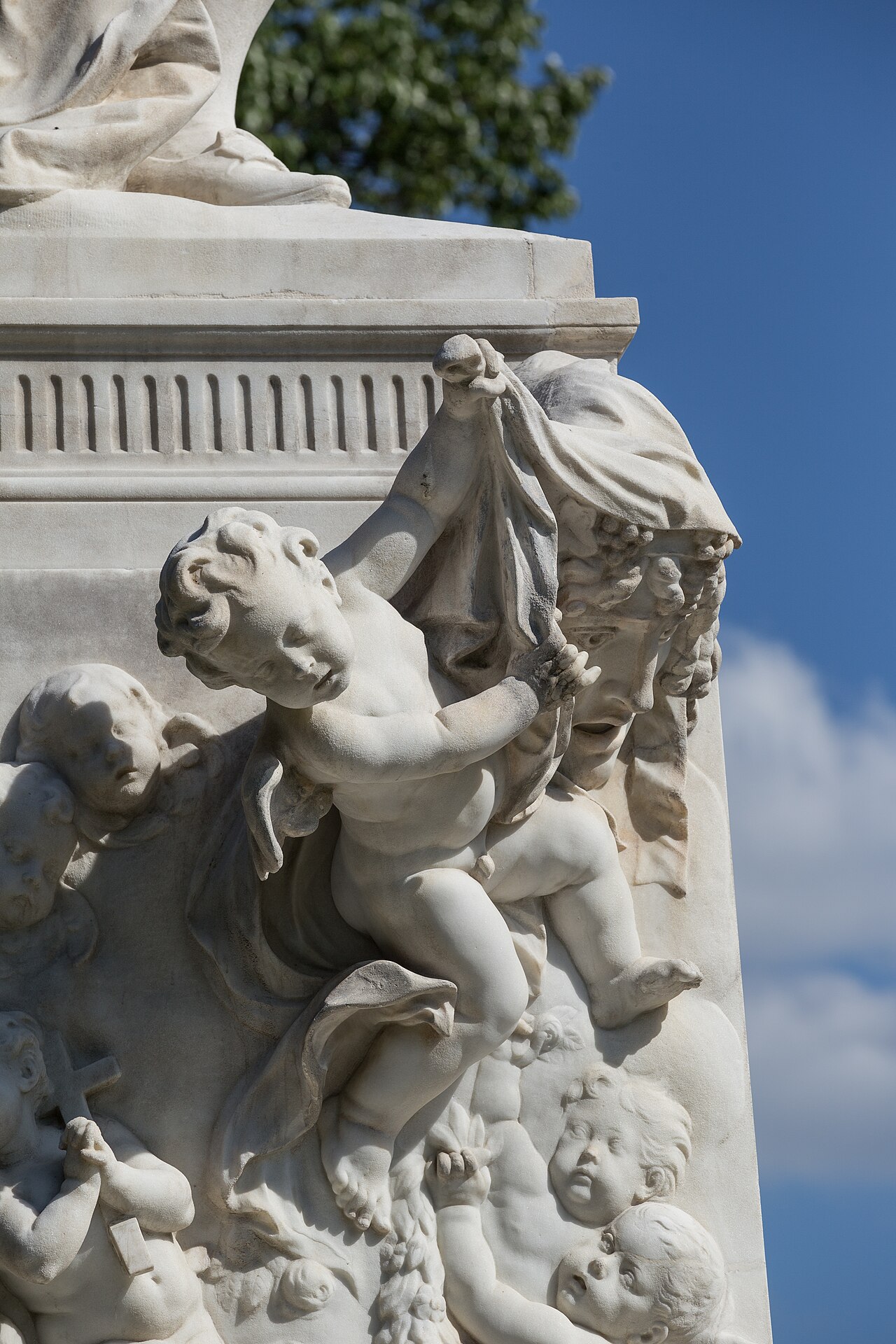
The standard shot is taken standing directly in front of the pedestal with the flowerbed's treble clef in the foreground and Mozart's figure rising behind it, which only works when the bed is in bloom. Midday sun bleaches the white marble and flattens the carved relief panel; early morning or overcast light holds the detail on both the figure and the relief better than direct sun does.
2026-08-23 kontrol edildi · Kaynak
Yes. It stands in the Burggarten, a public park with no entry fee, open from dawn to dusk.
It is planted each season as a treble clef beneath the pedestal, the monument's best-known and most photographed detail; it is only visible while the bed is in bloom, roughly late spring to early autumn.
No. It stood on Albertinaplatz from its 1896 unveiling until wartime bomb damage forced its restoration, after which it was placed in its current spot in the Burggarten in 1953.
Viktor Tilgner, unveiled in 1896, the same year he died.
The Palm House glasshouse restaurant and its attached Schmetterlinghaus butterfly house, and statues of Emperor Franz Joseph and Goethe, all within a few minutes' walk.
No. They sell tickets to commercial evening concerts unrelated to the monument, the Burggarten or any official Mozart institution.
Etkileşimli harita yükleniyor…
Etkileşimli harita yüklenemedi.
Son güncelleme:
Kaynak: OpenStreetMap katkıda bulunanları, Wikidata ·