

6 min a pé · Fatih
Selim I
- Alto
- Monumento histórico
Idioma · 11 publicado
Local de culto · Fatih, Istambul
Kanlı Kilise
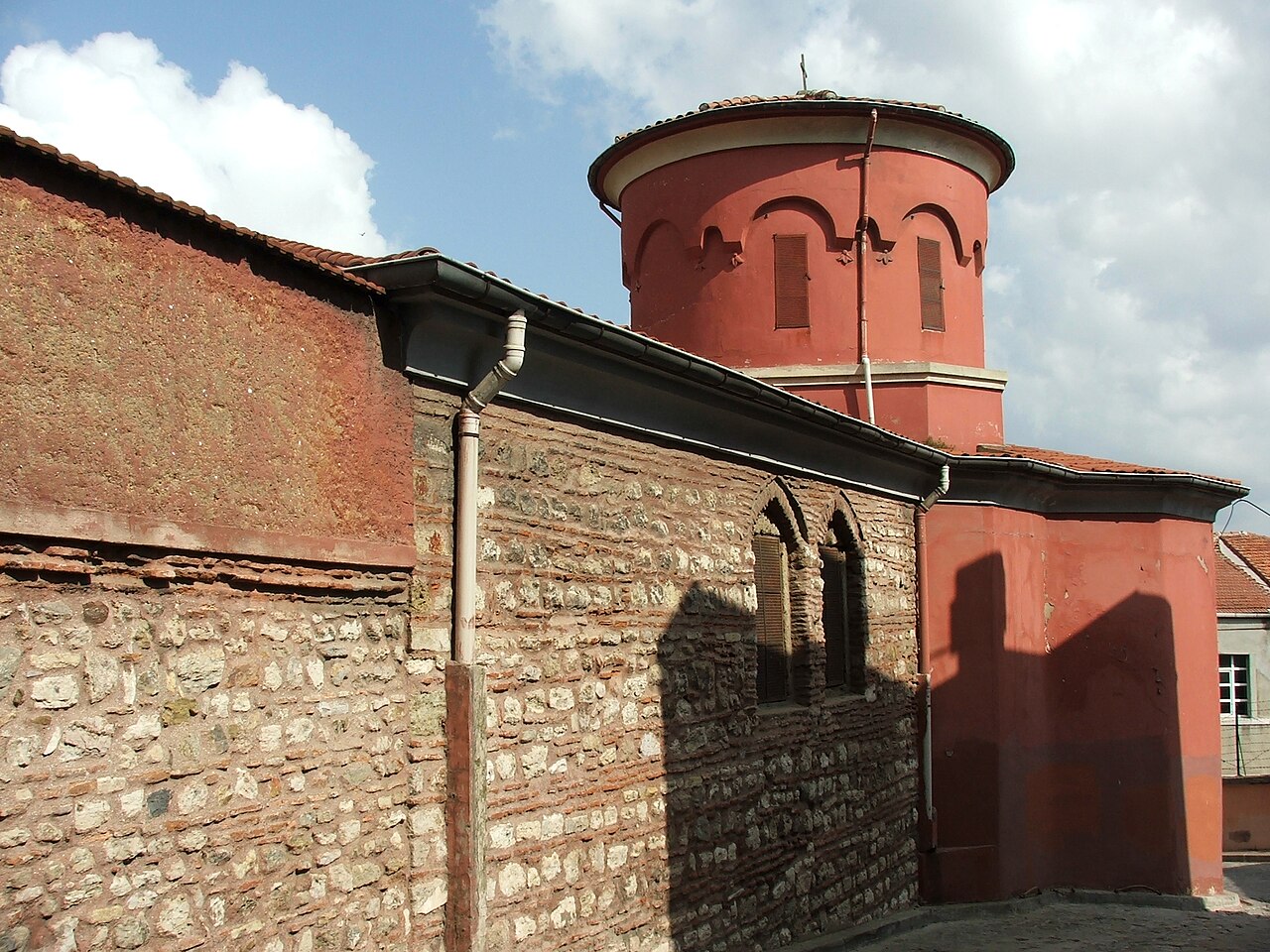
Este local é um Local de culto. Foi fundado em 1281. Foi construído no estilo arquitetura bizantina.
Behind a high wall on Tevkii Cafer Mektebi Sokak in Fener, a crimson-painted church keeps a distinction nothing else in Istanbul can claim: it is the only Byzantine church in the city that was never converted into a mosque, and Orthodox worship has continued in it without a break since the thirteenth century.
A nunnery stood here from the early seventh century, founded by the princess Sopatra. The building took the shape it still has when Maria Palaiologina, illegitimate daughter of Emperor Michael VIII, who had been sent east as a bride to the Ilkhan Abaqa Khan, returned to Constantinople in 1281 and rebuilt the complex. She is its foundress, and her Mongol marriage gave the church the name the world uses.
The Turkish name is darker: Kanlı Kilise, the Church of the Blood.
Verificado em 2026-08-24 · Fonte
The plan is what makes it singular. The church is a tetraconch, four apses around a centre, with a central dome enclosed within a tower, a form with no other example in Byzantine Constantinople. It is small: one space, no galleries, no circuit, nothing arranged for a visitor to walk around.
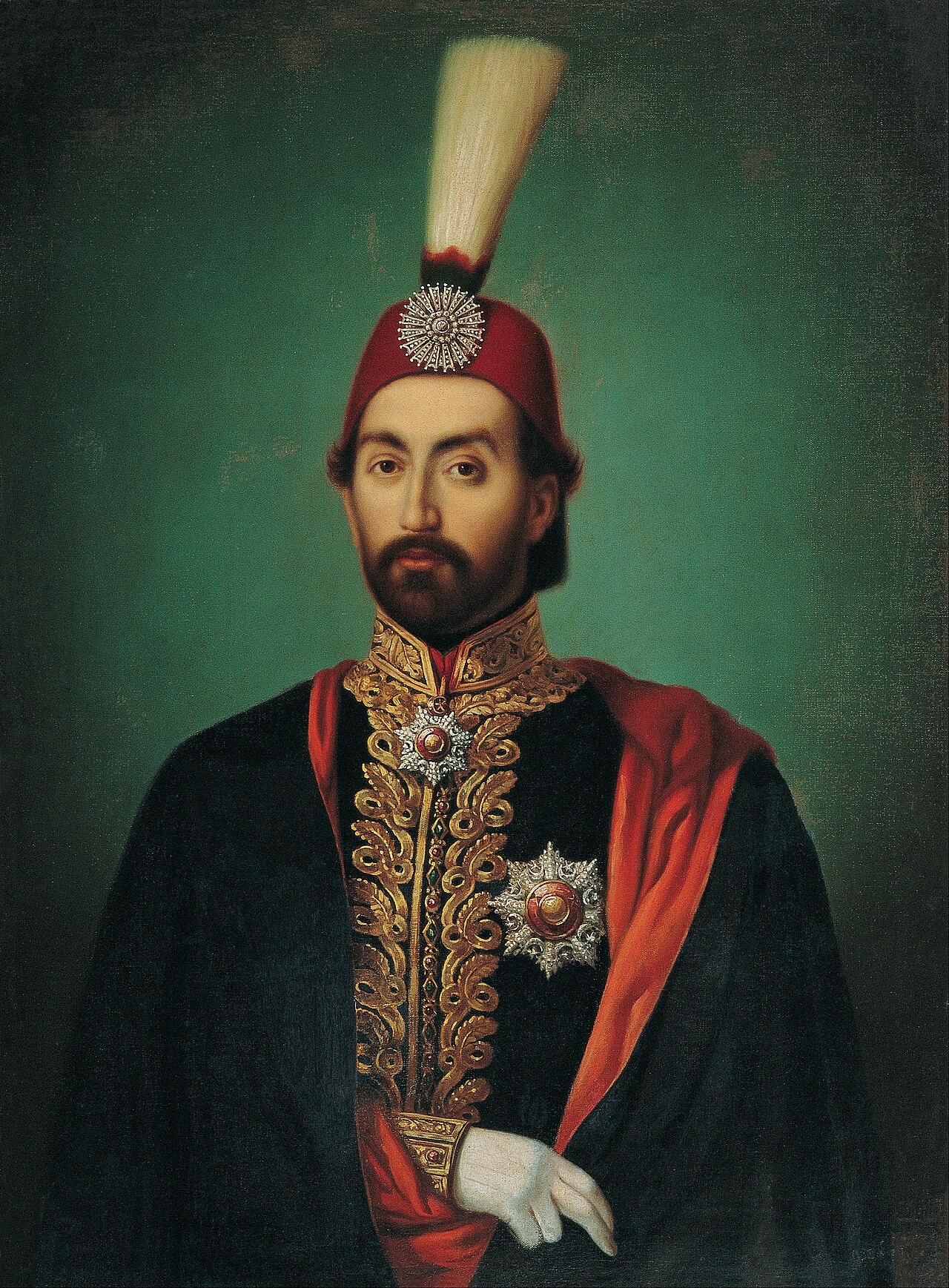
Its survival is a documentary matter rather than an architectural one. Mehmed II granted the church to the mother of Christodoulos, his Greek architect; Bayezid II confirmed the grant, and those firmans are why it was never taken. Later attempts by Selim I and by Ahmed II to convert it into a mosque failed against them, and it remained a parish of the Greek community, which it still is.
The Turkish name comes from 29 May 1453, when Greeks made a last stand here and the slaughter was such that the blood was said to run as a river down towards the Golden Horn.
Be clear about one thing, though: on most days what a visitor actually sees is the wall, the gate and the dome above them.
Verificado em 2026-08-24 · Fonte
Twenty minutes, and that is a generous estimate rather than a mean one. This is a single small church behind a high wall, one nave, no galleries, no museum route, and frequently it can be seen only from the street.
Twenty minutes covers walking the lane, looking at the enclosure from both ends of it, finding the angle up the slope where the dome clears the wall, and, if the door happens to be open, standing inside for as long as good manners allow in a working parish.
The right way to plan it is as a stop within a Fener and Balat walk rather than as a destination in itself. The neighbourhood, with its steep lanes, timber houses and the Greek and Bulgarian churches down by the water, is the afternoon. This church is one of its best twenty minutes, not a substitute for it.
Verificado em 2026-08-24
No visiting hours exist to publish. Neither the Ecumenical Patriarchate nor the parish itself states a schedule, and this guide records none rather than inventing one. That is not an administrative gap: the building is a functioning parish, not a museum, and it is generally not open to the public.
Entry, when it happens, is by arrangement or on days the community opens the church. The Divine Liturgy is still celebrated here, so access follows the parish calendar rather than an opening time.
Plan accordingly. Come in daylight, because the exterior in a narrow lane is the reliable part of the visit and it needs light. Come as part of a walk through Fener rather than as a special journey. And treat an open door as luck rather than as the expected outcome; a visitor who arrives assuming they will get inside is going to be disappointed, and may be tempted into behaviour that a residential parish does not deserve.
Verificado em 2026-08-24
Nothing is published. No operator source states either a charge or the absence of one, so this guide records no admission price and makes no free-entry claim. The church is a walled, roofed parish building rather than an open-air site, and the assumption of free access that might be reasonable elsewhere is not made here.
There is no ticket office, no booking page and no combined pass that includes it. That follows from what the place is: a parish of the Ecumenical Patriarchate serving a very small community, not a ticketed attraction under a cultural ministry.
If someone does open the door for you, understand what has happened. You have been shown hospitality by a congregation, not sold access to a monument. A quiet thank you and a short visit are the appropriate response, and any offering left is a gift rather than a fee.
Verificado em 2026-08-24
Fener sits on the western shore of the Golden Horn in Fatih, well upstream of Eminönü. The Golden Horn ferry line calls here, and arriving by water is much the pleasantest approach; buses also run along the shore road from the Eminönü direction, and the tram does not reach it.
From the waterfront the route is straight uphill through steep, narrow, thoroughly residential lanes. Your landmark is the Phanar Greek Orthodox College, the enormous red-brick building on the crest of the hill that is visible from the water and from half of Balat. The church is on a lane immediately below it, behind its own wall.
There is no signage worth relying on, and the entrance is a gate rather than a façade, so expect to walk past it once. That is normal, and asking a neighbour is faster than another circuit of the block.
Verificado em 2026-08-24
Expect the door to be shut. That is the single most useful thing to know, and accepting it in advance converts a frustrating trip into a good one.
What follows from it matters more here than at any ticketed site. Do not knock repeatedly, do not push at the gate, and do not treat a caretaker as an obstacle between you and a photograph. This is a working parish of a community that is now very small, and its privacy is not an inconvenience laid on for tourists.
The lanes around it are people's homes. Keep your voice down, do not photograph into windows or courtyards, and do not block a narrow street with a group.
Practically: the climb from the shore is steep and the cobbles are slippery after rain, so wear something with grip. And do not confuse this church with the Patriarchal Church of St George down by the water, or with the red college on the hill above. They are three different buildings and they are regularly mixed up.
Verificado em 2026-08-24
The subject is a crimson wall in a narrow lane with a dome rising behind it, and that constraint decides everything. There is no room to step back at the gate, so a wide lens earns its place; without one, the shot is taken from further up the slope, where the ground rises enough for the dome and the tower to clear the enclosure.
Morning light reaches the eastern side of the lane and gives the red wall its colour; by late afternoon the hill above puts the whole street into shade and the church goes flat and grey.
Do not set up a tripod. This is a residential lane, not a viewpoint, and blocking it for a composition is exactly the behaviour that closes doors to the next visitor.
If the church is open, ask before photographing anything inside, and accept a no without negotiating. A liturgy in progress is not a photo opportunity.
Verificado em 2026-08-24
Usually not. It is a functioning parish of the Ecumenical Patriarchate rather than a museum, it is generally not open to the public, and entry is by arrangement or on days the community opens it. Most visitors see the walled exterior and the dome from the lane.
None are published. Neither the Ecumenical Patriarchate nor the parish states a visiting schedule, so no hours are recorded here. The Divine Liturgy is still celebrated in the church, and access follows the parish calendar rather than an opening time.
Nothing is published. No operator source states either a charge or free entry, so neither is recorded. There is no ticket office and no booking page; if the church is opened for you, that is hospitality from a congregation rather than a service you have bought.
Mehmed II granted it to the mother of Christodoulos, his Greek architect, and Bayezid II confirmed the grant. Those firmans protected it, and later attempts by Selim I and Ahmed II to convert it failed. It has remained a Greek parish ever since.
The name recalls 29 May 1453, when Greeks made a last stand at the church during the fall of Constantinople. The slaughter that followed was said to be such that the blood ran as a river down towards the Golden Horn.
Come up from the Golden Horn shore towards the Phanar Greek Orthodox College, the large red-brick building on the crest of the hill. The church is on a lane immediately below it, behind its own wall, with no reliable signage, so expect to walk past the gate once.
A carregar o mapa interativo…
Não foi possível carregar o mapa interativo.
Última atualização:
Fonte: Colaboradores do OpenStreetMap, Wikidata ·