

8 min a pé · Beyoğlu
Douglas DC-3
- Alto
- Espaço de arte e cultura
Idioma · 11 publicado
Local de culto · Fatih, Istambul
Θεοτόκος των Βλαχερνών

Este local é um Local de culto. Foi construído no estilo arquitetura bizantina.
In 450 the Empress Aelia Pulcheria began a church beside an ayazma, a holy water spring, in the Blachernae quarter at the northern corner of Constantinople; she died in 453 and her husband, the Emperor Marcian, completed the shrine. Leo I added two further buildings alongside, including a parekklesion called the Ayía Sorós, the holy reliquary, because it held the mantle and robe of the Virgin brought from Palestine in 473.
For the better part of a millennium this was the Marian centre of the Byzantine capital. What stands today is not that church. On 29 June 1434 some noble children hunting pigeons on the roof accidentally started a fire that destroyed the whole complex and the surrounding quarter.
Verificado em 2026-08-24 · Fonte
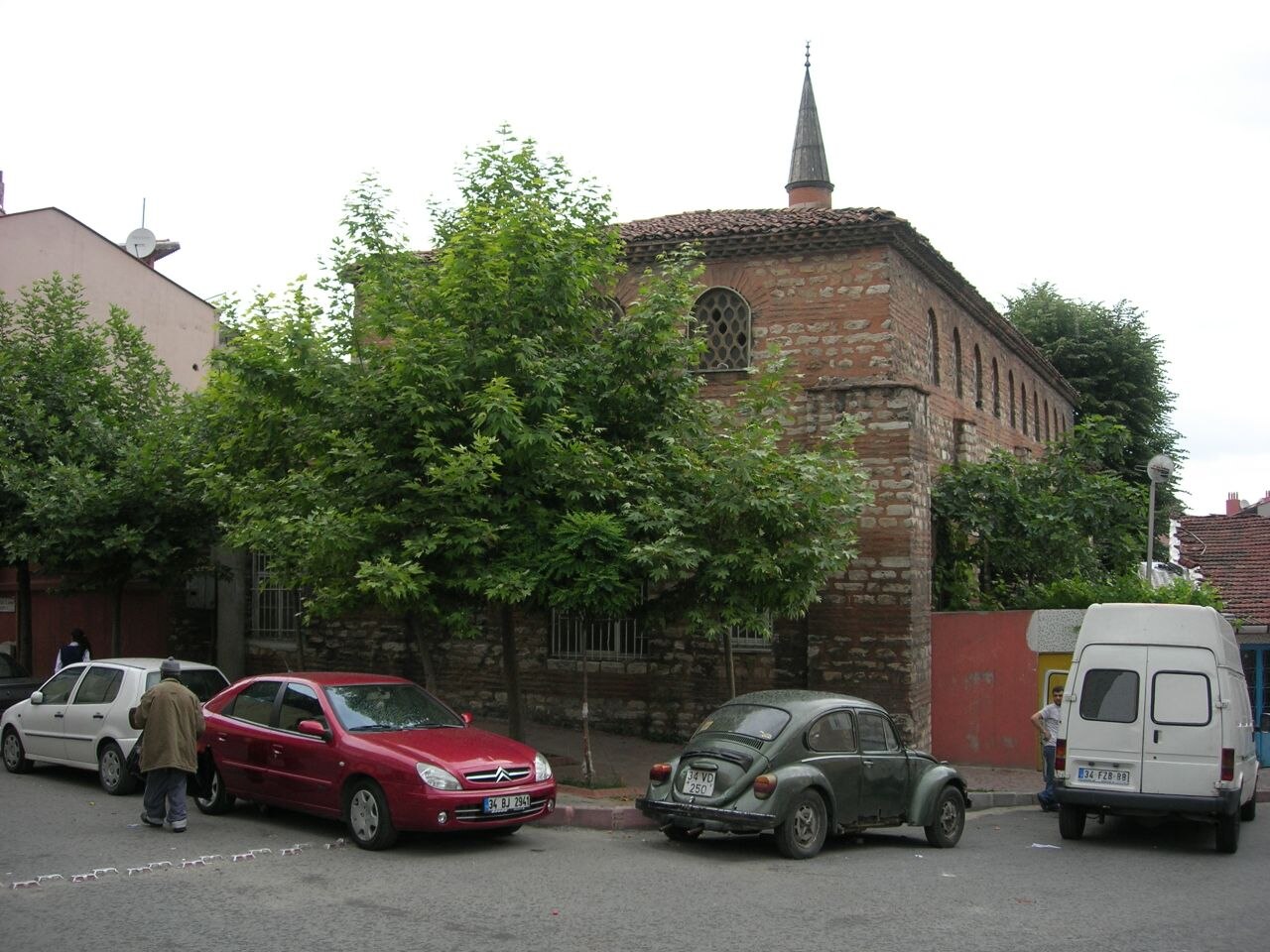
The present building dates from 1867, when the Guild of Orthodox Furriers bought the parcel of land around the holy spring and built a small church on it. It is modest: a trapezoidal plan under a sloping roof, oriented northwest to southeast, one room rather than a nave with aisles, set in a walled garden.
The continuity is not architectural but liturgical. The ayazma still runs, is believed to have healing powers, and remains a working destination for Orthodox and Muslim pilgrims alike. The Akathist Hymn, composed by Patriarch Sergius during the Avar and Persian siege of 626 when the Virgin's relics were carried on the walls, is still sung here weekly. That is the thread this place actually preserves.
Verificado em 2026-08-24 · Fonte
Twenty minutes. There is one room holding the icon, and the ayazma in its walled garden, and that is the whole site: no gallery, no crypt, no museum route, nothing to queue for and nothing to climb.
The time goes on quiet rather than on ground covered. Visitors who understand what the Blachernae shrine was to Byzantium tend to stand still in the garden for a while afterwards, which is the part of the visit worth protecting. Visitors expecting a Byzantine monument will be back on the street in five minutes, disappointed for reasons the next sections explain.
Verificado em 2026-08-24
The operator is the Ecumenical Patriarchate of Constantinople, and no page under the Patriarchate publishes visiting hours, a closed day, or a liturgy timetable for this church. Nothing is recorded here because nothing is published.
What governs access is the Orthodox calendar. The weekly Akathist service and the great Marian feasts, above all the Dormition on 15 August, fill the church with worshippers and turn a quiet shrine into a crowded one. On a feast day this is a pilgrimage site first and a place to look at second. A weekday morning outside the feast cycle gives the best chance of an open gate and an empty garden, with no guarantee attached to either.
Verificado em 2026-08-24
No admission figure is published by the Patriarchate for this church, so none is recorded. There is no ticket desk, no turnstile and nothing resembling a visitor entrance — the way in is a gate in a garden wall.
Pilgrimage sites of this kind commonly keep a candle stand and a donation box inside, and buying a candle is the ordinary gesture of a visitor who wants to leave something. That is a custom rather than a charge, and it is not documented by the operator. Nobody should arrive expecting to pay, and nobody should arrive assuming that a shrine in daily devotional use owes them free access as of right.
Verificado em 2026-08-24
The church is in Ayvansaray in Fatih, just inside the line of the old land walls, near where the Palace of Blachernae once stood at the junction of the land and sea defences. From the Golden Horn shore it is a short walk inland and slightly uphill through a quiet residential quarter.
The single practical difficulty is finding it. The building presents no facade to the street: what the visitor is looking for is a plain gate in a garden wall, easily walked past twice. Pin the coordinates before setting out rather than trusting a landmark silhouette, because there isn't one. The surrounding lanes are narrow, cobbled in places and shared with cars.
Verificado em 2026-08-24
The expectation gap is the real hazard. The name promises Byzantium and the 1434 fire means nothing Byzantine stands above ground here: the church is an 1867 chapel on an ancient site. Visitors who have read about Pulcheria, the maphorion and the siege of 626 sometimes arrive, see a small nineteenth-century room, and leave without understanding that the spring in the garden is the thing that is actually old.
Second, this is a shrine in devotional use. Pilgrims at the ayazma are praying, not sightseeing, and drinking from the spring is an act of devotion rather than a photo opportunity. Third, feast days make the garden impassable. Dress modestly and speak quietly.
Verificado em 2026-08-24
This is a small, low-lit interior in close quarters, which rules out sweeping shots and rewards details: the icon's metalwork, candle flame against dark wood, the worn marble around the spring's mouth. Expect to shoot wide open and steady against a wall, because there is no room to stand back and no reason to bring a tripod into a room this size.
Outside, the garden greenery frames the modest facade far better than a straight-on elevation does, and the wall and gate make the more honest picture of what this place is now. The one firm rule is people: pilgrims at the ayazma should not be in the frame, and a camera lowered when someone approaches the spring is the correct instinct.
Verificado em 2026-08-24
No. On 29 June 1434 some noble children hunting pigeons on the roof accidentally started a fire that destroyed the whole complex and the surrounding quarter. The building on the site today was put up in 1867 by the Guild of Orthodox Furriers, who bought the parcel of land around the holy spring.
The Marian centre of Byzantine Constantinople. Empress Aelia Pulcheria began it in 450 beside a holy spring; she died in 453 and Emperor Marcian completed it. Leo I added the parekklesion known as the Ayía Sorós, which held the mantle and robe of the Virgin brought from Palestine in 473.
The holy water spring the church was built beside in 450 and around which the 1867 chapel was rebuilt. It is believed to have healing powers and remains a working destination for Orthodox and Muslim pilgrims alike — the element of the site that is genuinely ancient.
It was composed by Patriarch Sergius during the Avar and Persian siege of 626, when the Virgin's relics kept here were deployed on the walls. It is still sung at this church weekly, which is the real thread of continuity across the 1434 destruction and the 1867 rebuilding.
Neither is published. The operator is the Ecumenical Patriarchate of Constantinople, and no page under the Patriarchate gives visiting hours, a closed day, a liturgy timetable or an admission figure for this church, so nothing is recorded. Access follows the Orthodox calendar.
About 20 minutes. There is one room holding the icon and the ayazma in its walled garden — no gallery, no crypt and no museum route. The time is spent standing still rather than covering ground, and feast days, above all the Dormition on 15 August, change the experience completely.
A carregar o mapa interativo…
Não foi possível carregar o mapa interativo.

Última atualização:
Fonte: Colaboradores do OpenStreetMap, Wikidata ·